
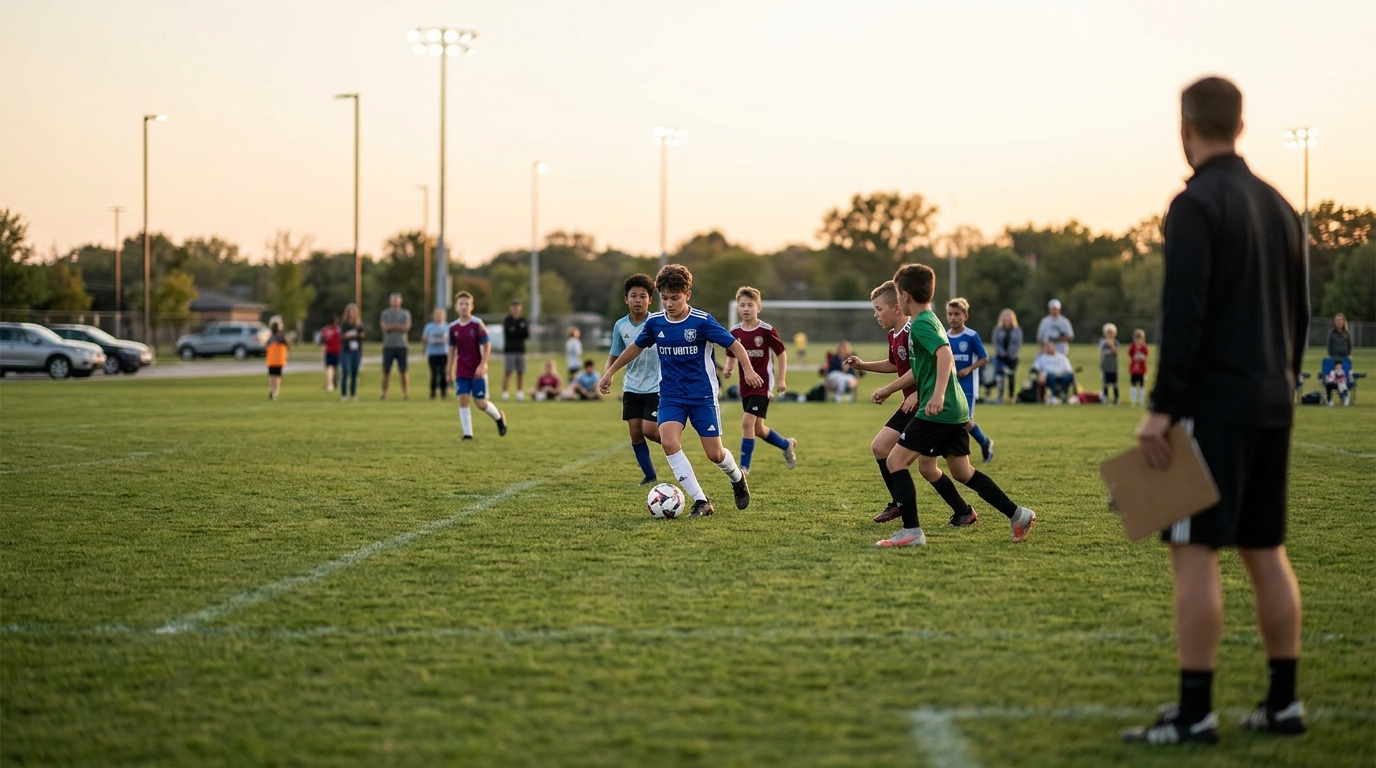
How is club soccer organized and structured compared to independent coaching?
Club soccer is organized around team registration, league schedules, and collective tactical development, whereas independent coaching focuses on individual technical mastery and personalized feedback. While clubs provide the competitive environment and team structure, independent coaching offers the high-repetition, one-on-one attention necessary to refine specific skills like first touch and ball control. Understanding this structural difference helps parents and players allocate their training time effectively to maximize long-term development.
The Structural Framework of Club Soccer
Club soccer is a hierarchical system designed to develop players within a team context. It is structured around age groups, competitive leagues, and seasonal tournaments. In regions like North Texas, the club environment is particularly intense, with multiple top-ranked clubs competing in national leagues such as ECNL and MLS NEXT. The primary goal of a club is to field competitive teams, which means training sessions are often focused on team tactics, set pieces, and collective movement rather than individual technical perfection.
The organization of a club typically involves a head coach, assistant coaches, and a sports director who manage player placement and team chemistry. Players are grouped by age and skill level, but the coaching attention is divided among 15 to 20 players per session. This structure ensures that players experience the pressures of competition and learn to function as part of a unit. However, the large group size limits the amount of individual feedback a player can receive during a standard practice session.
The Role of Independent Coaching
Independent coaching, often referred to as private skills training, is a specialized service focused on the individual athlete. It is defined by a one-on-one or small-group setting where the trainer’s sole focus is the technical and mental development of the player. Unlike club coaches who must manage the entire roster, independent trainers like those at Global Futbol Training dedicate their time to refining specific mechanics, such as the exact parts of the foot used for passing or trapping.
This type of coaching is not bound by a team schedule or league mandate. Instead, it is driven by the player’s specific weaknesses and goals. For example, a player struggling with aerial control can spend an entire session practicing settling the ball out of the air, a drill that might only receive a few minutes in a club practice. The independence of this model allows for a faster rate of improvement in technical skills because the feedback loop is immediate and personalized.
Training Dynamics and Player Attention
The most significant difference between the two structures lies in the ratio of coach to player. In a club setting, a coach might have 15 players, meaning each player receives only a fraction of the coach’s attention. In contrast, independent coaching provides a 1:1 ratio, ensuring that every rep is corrected and every question is answered. This high level of attention is critical for building confidence, as players are less likely to develop bad habits when they are closely monitored.
Furthermore, the environment of independent coaching is often more relaxed and focused on skill acquisition rather than performance pressure. Players can experiment with new techniques without the fear of letting down a team. This psychological safety is a key component of long-term athlete development. As noted in guides on technical training, the quality of the teaching and the trainer’s character are paramount in this setting.
Financial and Time Commitments
Club soccer requires a significant financial investment, often ranging from $2,000 to $15,000 per year depending on the league and age group. This cost covers coaching fees, league fees, uniforms, and travel expenses. The time commitment is also substantial, with players typically required to attend two to three team practices per week plus weekend matches. This structure is designed to ensure consistency and team cohesion, but it can be demanding for families.
Independent coaching is an additional expense that families choose to invest in for targeted improvement. While it does not replace the need for club membership, it complements it by addressing gaps in technical development. The cost of private lessons varies, but the value lies in the accelerated skill acquisition. For many players, the investment in independent coaching is the difference between being a good player and an elite one, as it allows them to touch the ball more frequently and with higher precision than they would in a team setting.
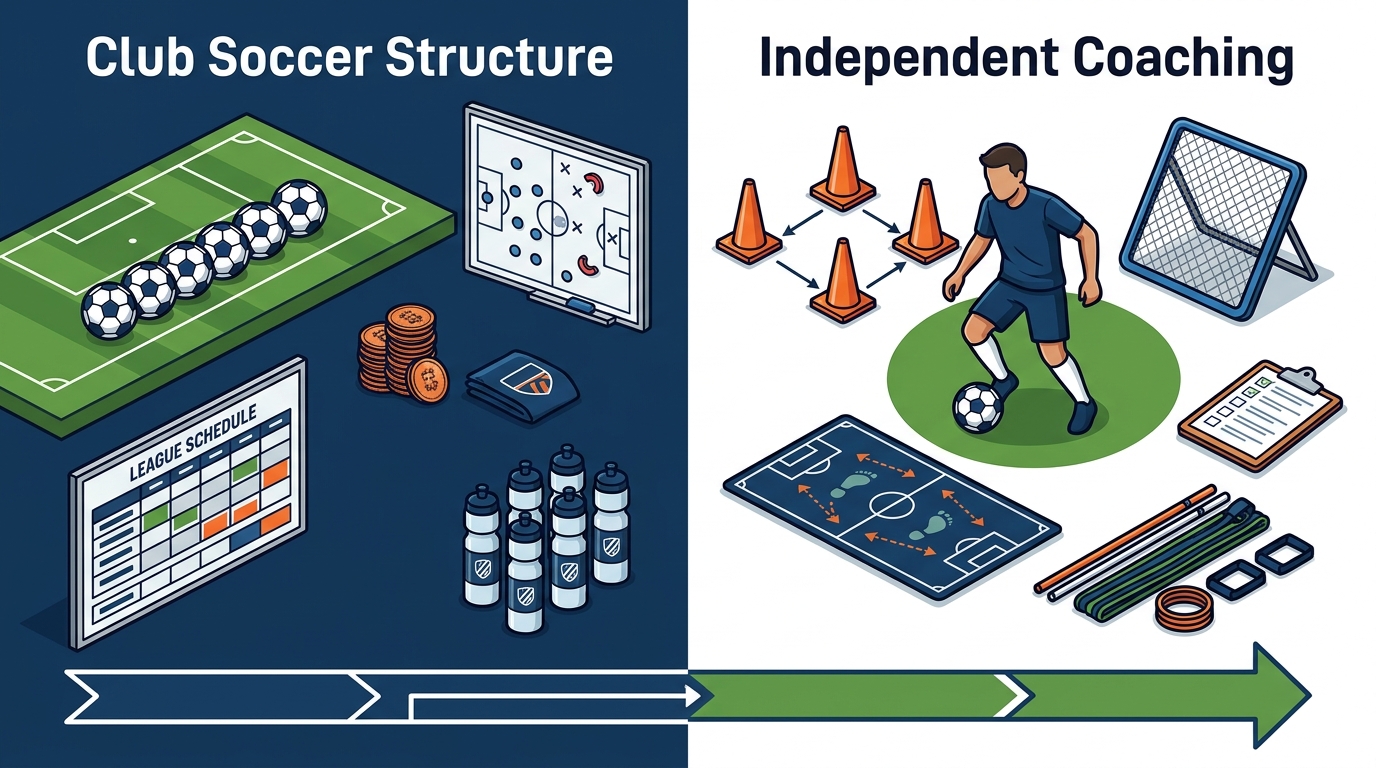
Creating a Synergistic Development Path
The most effective player development path often combines both club soccer and independent coaching. The club provides the competitive arena and team experience, while the independent coach provides the technical foundation. Players who train independently often report feeling more confident in their club practices because they have mastered the basics. This synergy allows them to focus on tactical understanding during team sessions, as they are no longer struggling with fundamental skills.
For parents and players, the key is to view these two structures as complementary rather than competing. By understanding the distinct roles of each, families can make informed decisions about how to allocate their time and resources. Global Futbol Training emphasizes that technical skill and mindset development are the cornerstones of success, and that these elements are best cultivated through a combination of team play and dedicated individual training.
Key Takeaways
- Club soccer is organized around team competition, league schedules, and collective tactics.
- Independent coaching focuses on individual technical mastery and personalized feedback.
- The coach-to-player ratio is significantly higher in independent coaching, allowing for more detailed correction.
- Club soccer involves higher financial and time commitments due to league fees and travel.
- Independent coaching provides a psychological safe space for players to experiment and build confidence.
- The most effective development path combines the competitive experience of clubs with the technical focus of private training.
Frequently Asked Questions
What is the main difference between club soccer and private training?
The main difference is the focus: club soccer emphasizes team tactics and competition, while private training focuses on individual technical skills and personalized feedback.
How many players are typically in a club practice session?
Club practice sessions usually involve 15 to 20 players, which limits the amount of individual attention each player can receive from the coach.
Can independent coaching replace club soccer?
No, independent coaching complements club soccer. It is designed to enhance the technical skills that players then apply in a team setting.
What skills are best improved through independent coaching?
Skills such as first touch, passing accuracy, dribbling in tight spaces, and aerial control are best improved through independent coaching due to the high repetition and focused feedback.
How much does club soccer cost per year?
The cost of club soccer can range from $2,000 to $15,000 per year, depending on the league, age group, and travel requirements.
Why is the coach-to-player ratio important in training?
A lower coach-to-player ratio, such as 1:1 in private training, allows for more immediate feedback and correction, which accelerates skill acquisition and builds confidence.
Conclusion
Understanding the structural differences between club soccer and independent coaching is essential for any player aiming to reach their full potential. While clubs provide the competitive framework and team experience, independent coaching offers the focused attention needed to master the technical details of the game. By leveraging both structures, players can develop the confidence and skill set required to excel at higher levels of competition. For those looking to enhance their technical abilities, contacting Global Futbol Training is a great first step toward building a comprehensive development plan.