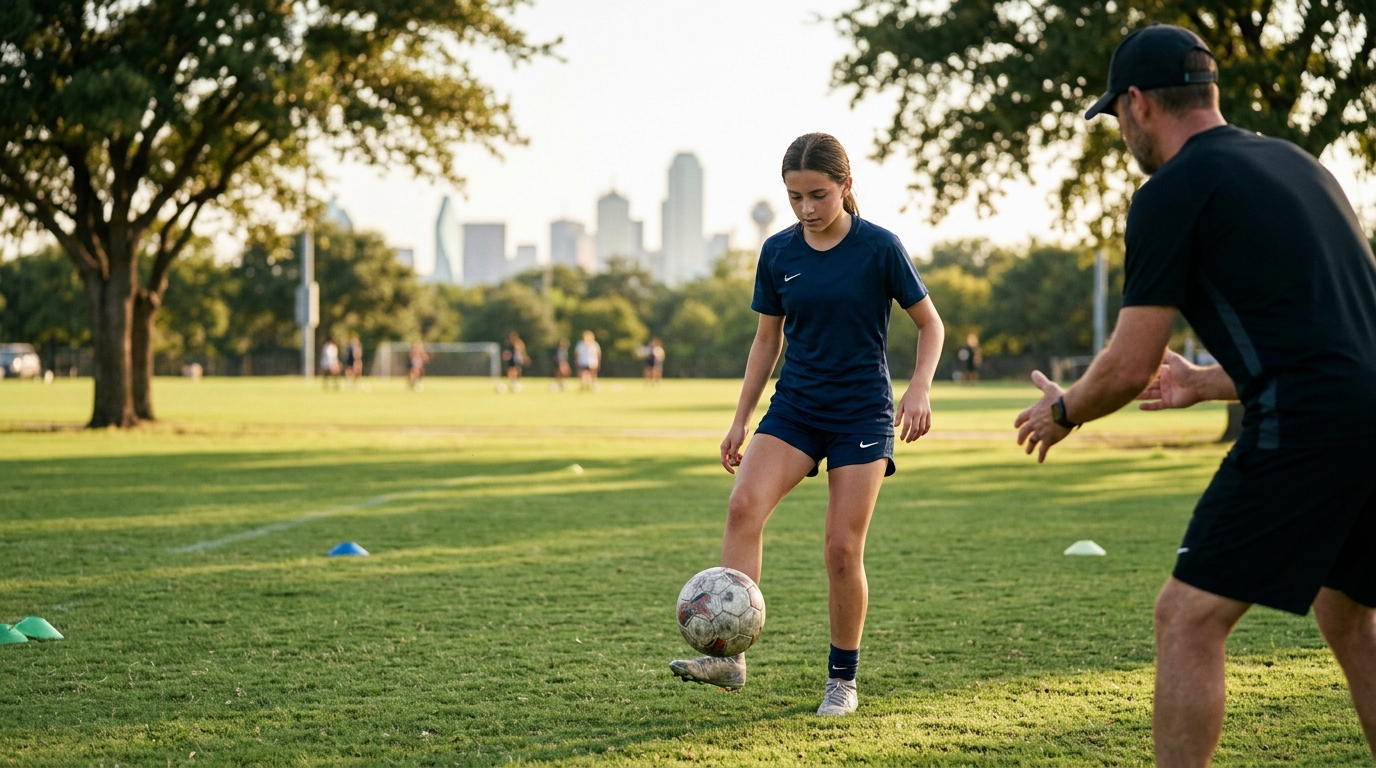
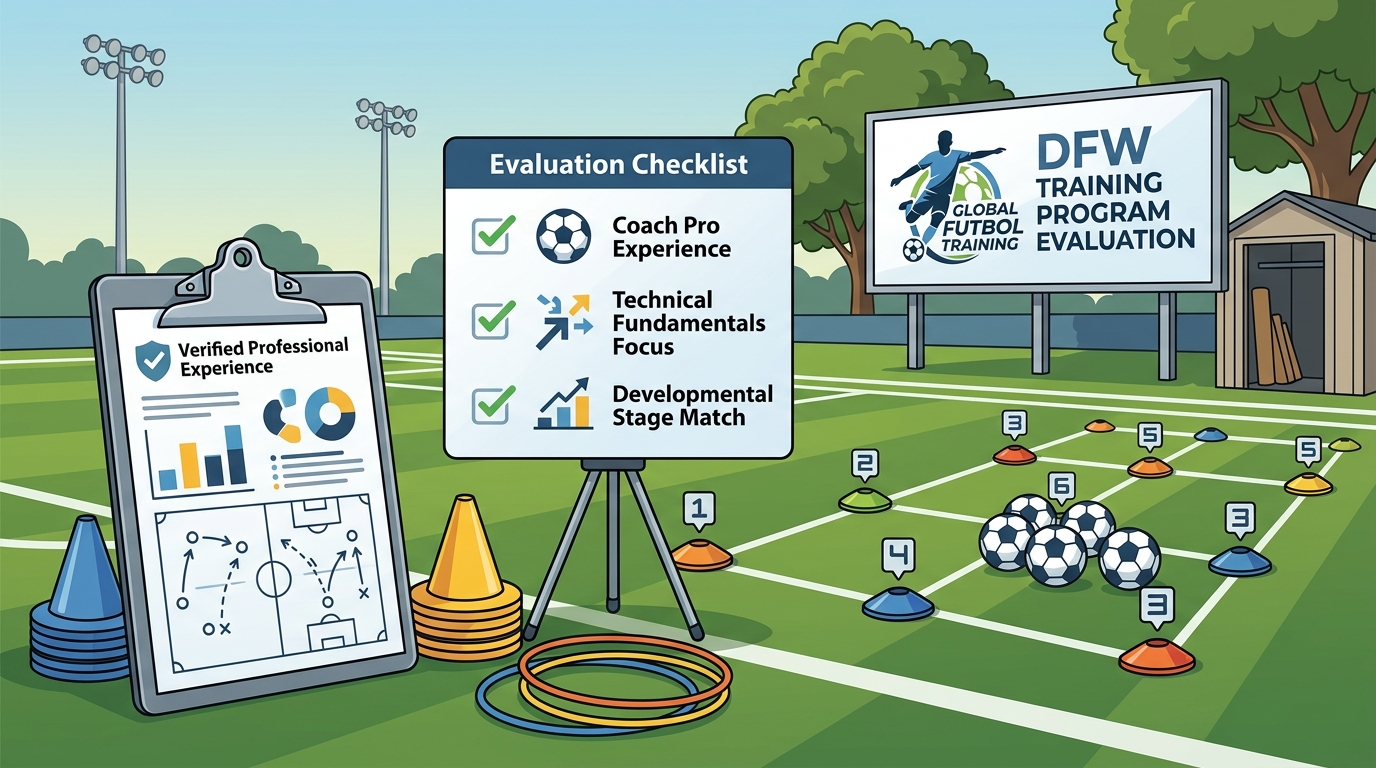
When choosing a DFW soccer training program, prioritize a coach with verified professional experience, a curriculum focused on technical fundamentals rather than flashy tricks, and a training format that matches your player's specific developmental needs. Global Futbol Training has operated in the Dallas-Fort Worth area since 2008, helping players from youth to professional levels build confidence through structured, evidence-based technical development.
Verify Coach Credentials and Playing Experience
The single most important factor in selecting a private soccer trainer is the coach's character and professional background. Many individuals with high school or college playing experience offer private lessons, but a true specialist must possess a deep understanding of age-appropriate skill development. Jeremie Piette, founder of Global Futbol Training, played professional soccer for seven years across 17 countries before establishing his player development company in 2007. This extensive background allows a coach to recognize subtle mechanical errors that a casual observer might miss. When evaluating a trainer, ask about their specific experience working with your child's age group and competitive level. A qualified coach should be able to explain exactly why they are prescribing a specific drill for a specific weakness.
Prioritize Technical Fundamentals Over Tricks
Technical training is the foundation of elite soccer performance, focusing on practical skills used in every match rather than social media highlights. Many parents confuse technical ability with freestyle tricks, but professional players spend their time mastering trapping, passing, and shooting mechanics. The GFT Ball Control Method emphasizes that players must be comfortable using every part of their feet to maintain possession under pressure. A high-quality DFW program will teach players how to settle the ball out of the air and execute accurate passes with both feet. If a training program focuses heavily on flashy moves that are rarely seen in professional matches, it is likely wasting your child's practice time. Look for a curriculum that builds muscle memory through consistent, game-relevant repetitions.
Match the Training Format to Player Needs
The difference between private 1-on-1 training and small group sessions comes down to the volume of high-quality repetitions and the type of feedback provided. Private lessons allow for significantly more ball-striking and first-touch reps, which is ideal for players who need immediate correction on their form. Small group training is often better for older players who are already fundamentally sound and benefit from competitive scenarios. Adolescents often prefer private settings because they feel less embarrassed receiving direct feedback in front of peers. You should assess whether your player needs individualized attention on a specific weakness or if they thrive in a competitive group environment. The right format depends entirely on the individual's current skill level and psychological comfort.
Ensure Age-Appropriate Skill Progression
Proper soccer training is teaching technique to the right age group, ensuring that players are not overwhelmed by complex tactics before they have mastered the basics. Too much time is wasted in youth practices with kids standing in lines, which reduces their total touches on the ball. A good program groups players by skill level rather than just age, allowing technical players to work with similar peers while athletic players develop their own strengths. Grouping by skill protects player confidence and ensures that every child is challenged appropriately. If a program forces a beginner to train with advanced players without adjusting the drills, the beginner will likely lose confidence and stop playing. Look for a coach who understands that a player with a lower skill set can still be a valuable team member through work ethic and aggression.
Evaluate the Training Environment and Mindset
A positive training environment is essential for long-term player development, as confidence and passion are just as important as technical ability. A good coach makes players excited to return the following week and teaches character, teamwork, and how to stay positive during difficult moments. The right soccer training focuses on skills for the right age and level while helping kids feel confident about themselves. Players who are constantly criticized or pressured to perform beyond their ability often burn out before reaching their potential. The training environment should challenge players while maintaining a supportive atmosphere where mistakes are viewed as learning opportunities. Consistency, honesty, and reliability are the qualities families should look for in a long-term training partner.
Key Takeaways
- Verify the coach's professional playing experience and specific history with your player's age group.
- Choose a program that focuses on practical technical skills like passing and trapping, not freestyle tricks.
- Select private 1-on-1 training for players who need form correction and high-rep ball striking.
- Opt for small group training if your player is fundamentally sound and thrives in competitive settings.
- Ensure the program groups players by skill level to protect confidence and provide appropriate challenges.
- Look for a positive environment where the coach builds confidence and teaches character alongside skills.
Frequently Asked Questions
How many times a week should my child train privately?
Most players benefit from one to two private sessions per week, depending on their current skill level and goals. Consistency is more important than volume, so a regular schedule helps build muscle memory faster.
Is private training better than small group training?
It depends on the player's needs. Private training offers more reps and direct feedback, while small groups provide competitive scenarios and social interaction.
What age should my child start private soccer training?
Players can start as young as 4 or 5 years old, but the focus should be on fun and basic ball familiarity. More structured technical training is typically introduced around ages 8 to 10.
Do I need to be in the DFW area to train with Global Futbol Training?
No, Global Futbol Training offers online ball control courses that players from the United States, UK, Australia, and New Zealand can access from home.
How long does it take to see improvement in ball control?
Most players notice improvements in confidence and first touch within a few weeks of consistent practice, with significant technical changes occurring over several months.
Can private training help my child get recruited to college?
Private training can improve the technical skills that college coaches look for, but it does not guarantee recruitment. Players must also focus on academics and team performance.
Start Your Player's Development Today
Choosing the right DFW soccer training program is a critical step in your player's long-term development. By focusing on a coach with proven experience, a curriculum rooted in technical fundamentals, and a format that suits your child's personality, you set the stage for lasting improvement. Contact Global Futbol Training to discuss your player's specific needs and find the right training path for their success.