
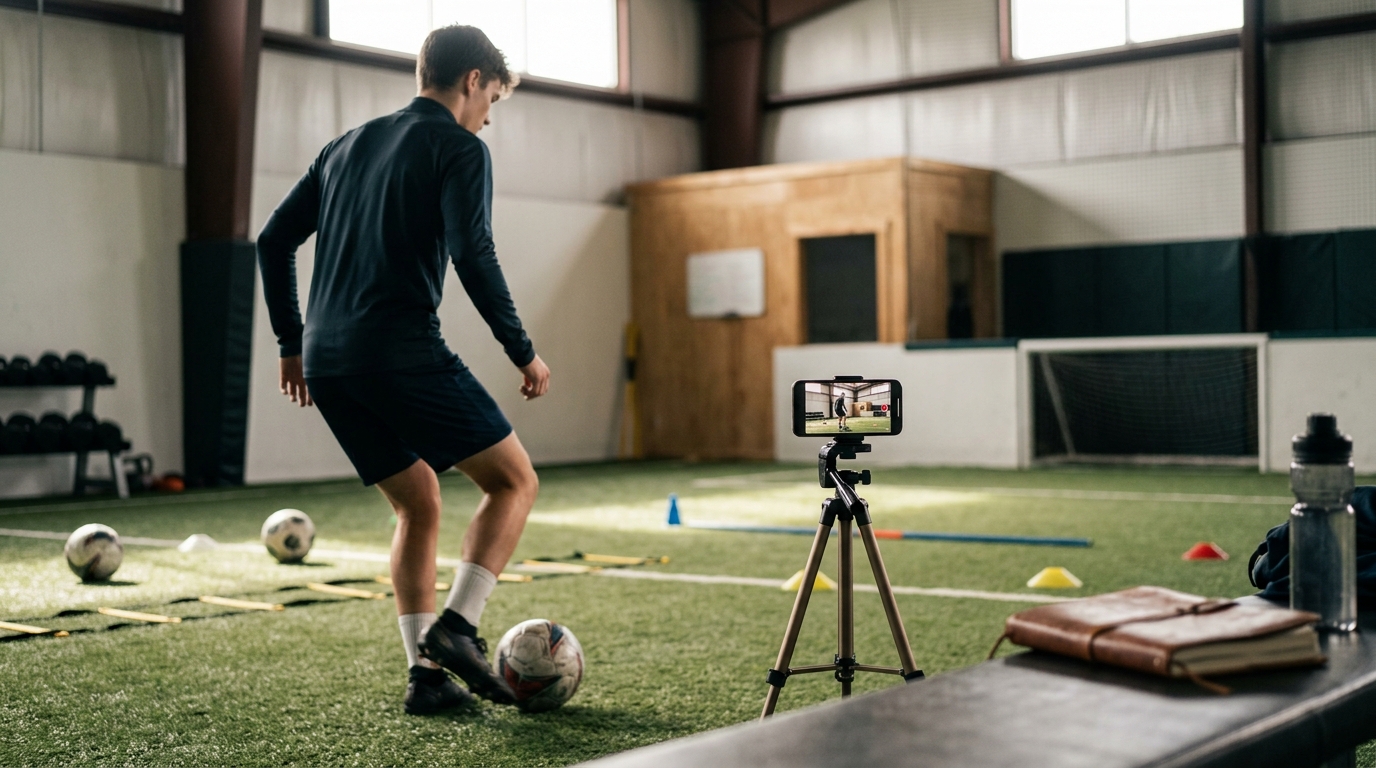
Global Futbol Training offers a structured online soccer development platform that works with players of all skill levels in the DFW area and beyond. This guide covers how to select the right technical training, private coaching, and facility options to build confidence and improve first touch. We will explore the specific methods used to develop ball control and shooting mechanics for youth, college, and professional athletes.
DFW Soccer Academies
The Dallas-Fort Worth metroplex is a hub for competitive soccer. Many local academies focus on team play and tournament results. However, individual technical development is often the missing piece in traditional academy structures. Players need to master the ball before they can execute complex tactical instructions. Global Futbol Training provides a complementary approach that focuses on individual mechanics. This ensures that players recruited by top programs have the foundational skills to succeed.
The Role of Individual Development
Academies typically group players by age and team placement. While this builds team chemistry, it can leave gaps in individual technique. A player may be fast but lack the first touch to control a high ball. They may be strong but unable to shoot with power and accuracy. Addressing these gaps requires dedicated individual training. This type of training is best done outside of team practice sessions.
Choosing the Right Environment
When selecting a training environment in DFW, look for programs that prioritize repetition and feedback. The best environments allow players to track their progress over time. They should offer resources that explain the 'why' behind each drill. This educational component helps players understand how to apply skills in game situations. It moves them beyond simple imitation to true mastery.
Technical Skill Development
Technical skill development is the process of building muscle memory for soccer movements. It involves repetitive practice of specific actions like passing, shooting, and trapping. The goal is to make these actions automatic under pressure. When a player has strong technical skills, they can make decisions faster on the field. This reduces the cognitive load during high-intensity matches.
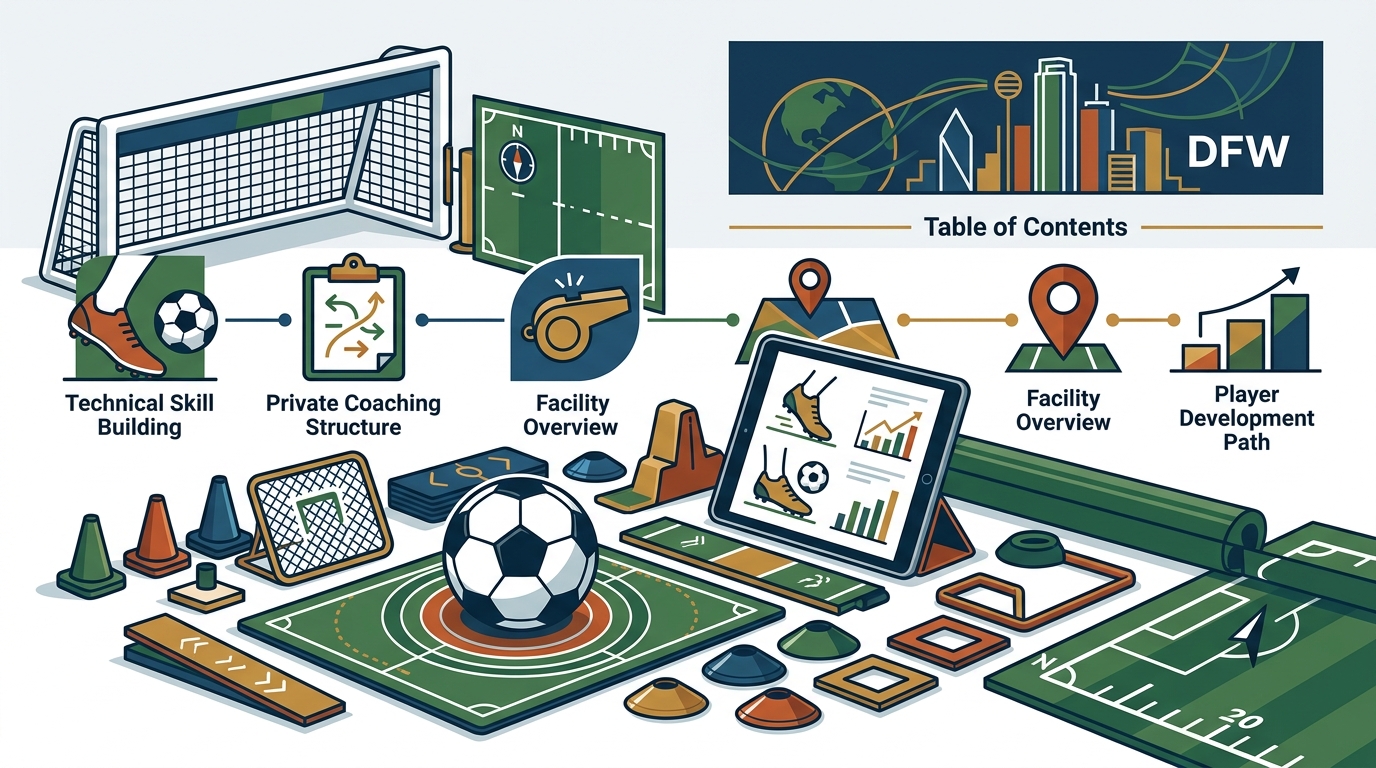
First Touch and Ball Control
First touch is the initial contact a player makes with the ball. It is the foundation of all technical play. A good first touch allows a player to shield the ball from opponents. It also sets up the next action, whether that is a pass or a shot. Players must practice receiving the ball from different angles and heights. This includes ground passes, lofted balls, and rebounds.
Shooting Mechanics
Shooting with power requires proper body mechanics. One critical element is locking the ankle. Locking the ankle is the act of stiffening the foot and ankle joint to transfer force from the leg to the ball. Without a locked ankle, energy is lost, and the shot lacks power. It also increases the risk of injury. Players must learn to lock their toes down for laces shots and up for inside-of-the-foot passes.
Private Coaching Options
Private coaching offers personalized feedback that group sessions cannot provide. A private coach can observe a player's technique in real-time. They can identify subtle errors in posture or foot placement. This immediate correction accelerates the learning process. For players in DFW, private coaching is an excellent way to target specific weaknesses.
Online vs. In-Person Coaching
Online coaching allows players to train on their own schedule. It is ideal for players who live far from a training facility. In-person coaching provides hands-on guidance and physical cues. Both methods have their benefits. The best approach often combines both. Players can use online resources for daily practice and in-person sessions for advanced feedback.
Feedback and Progress Tracking
Indoor Soccer Facilities
Benefits of Indoor Training
Indoor facilities offer consistent playing surfaces. This consistency helps players develop reliable footwork. The enclosed space also allows for specific drills that require walls or boundaries. For example, wall passing drills are highly effective for improving first touch and accuracy. Indoor training is also safer for young players due to the absence of hard ground or uneven terrain.
Selecting a Facility
When choosing an indoor facility, consider the quality of the turf. The surface should be well-maintained and appropriate for the player's age and skill level. Lighting is also important for visibility and safety. Proximity to home or school is another factor to consider. Convenience encourages consistent attendance, which is key to skill development.
Skill Level Groupings
Effective training programs group players by skill level rather than just age. This ensures that drills are appropriately challenging. Beginners need to focus on basic ball control and confidence. Intermediate players work on combining skills and decision-making. Advanced players refine their technique under high pressure. Proper grouping prevents frustration and promotes steady progress.
Beginner Level
Beginners are players who are new to soccer or have limited experience. Their primary goal is to become comfortable with the ball. They should focus on dribbling, stopping, and starting. These fundamental movements build the foundation for more complex skills. Beginners benefit from simple, repetitive drills that build confidence.
Intermediate and Advanced Levels
Intermediate players have a solid foundation and are ready to combine skills. They work on passing sequences, shooting from movement, and defensive techniques. Advanced players focus on refining their technique and applying it in game-like scenarios. They need to develop the ability to perform under pressure and make quick decisions. This level of training requires a high degree of focus and discipline.
Technical Skill Training
Technical skill training is a systematic approach to improving soccer abilities. It involves a structured curriculum that progresses from basic to advanced concepts. The training should be consistent and focused. Players need to dedicate time each week to their technical development. This consistent effort leads to significant improvements over time.
The GFT Method
Global Futbol Training uses a step-by-step training system to build confidence and improve first touch. The method is designed to be accessible to players of all levels. It breaks down complex skills into manageable components. Players can track their progress and see tangible results. This structured approach ensures that no key element is overlooked.
Consistency and Patience
Mastering technical skills takes time and patience. Players must remind themselves to focus on the details of each movement. For example, when learning to lock the ankle, players must consciously stiffen their foot with every kick. This conscious effort eventually becomes automatic. Coaches and parents should encourage this process without being overly critical. Patience is key to long-term success.
Key Takeaways
- Technical skill development is the foundation of soccer performance and requires consistent practice.
- Locking the ankle is a critical mechanic for generating power in shots and passes.
- Private coaching provides personalized feedback that accelerates learning and corrects errors.
- Indoor facilities offer a controlled environment for year-round technical training.
- Grouping players by skill level ensures that drills are appropriately challenging.
- Online training platforms allow for flexible, self-paced learning that complements team practice.
- Consistency and patience are essential for mastering complex soccer techniques.
- First touch is the most important skill for controlling the ball and setting up the next action.
Frequently Asked Questions
What is the best way to improve first touch?
The best way to improve first touch is through consistent, repetitive practice. Focus on receiving the ball from different angles and heights. Use drills that simulate game situations, such as receiving a pass and immediately playing the next ball. This builds the muscle memory needed for quick decision-making.
How long does it take to see improvement in technical skills?
Improvement in technical skills can be seen within a few weeks of consistent practice. However, mastering complex techniques may take months or even years. The key is to be patient and consistent. Small, daily improvements add up to significant long-term progress.
Is online soccer training effective?
Yes, online soccer training is highly effective. It allows players to learn at their own pace and on their own schedule. Many online platforms provide video demonstrations and progress tracking. This makes it easy for players to understand and apply the techniques they are learning.
What is the difference between technical and tactical training?
Technical training focuses on individual skills like passing, shooting, and dribbling. Tactical training focuses on team strategy and positioning. Both are important, but technical skills are the foundation. A player must have the technical ability to execute tactical instructions effectively.
How can I find a good private soccer coach in DFW?
Look for coaches with experience in technical development and a track record of success. Read reviews and ask for references. A good coach will provide personalized feedback and a structured training plan. They should be able to adapt their methods to the player's specific needs and goals.
What are the benefits of indoor soccer training?
Indoor soccer training provides a controlled environment that is not affected by weather. It allows for consistent practice of technical skills. Indoor facilities often have specific features like walls and boundaries that are useful for drills. This makes it an ideal setting for focused technical development.
How important is ankle locking in soccer?
Ankle locking is extremely important for generating power and accuracy in shots and passes. It also helps protect the ankle from injury. Players must learn to consciously stiffen their foot and ankle joint when making contact with the ball. This technique is essential for all players, from beginners to professionals.
Can I improve my soccer skills at home?
Yes, you can improve your soccer skills at home. Many technical drills can be done in a small space, such as a driveway or backyard. Focus on ball control, first touch, and shooting mechanics. Consistent practice in a home environment can lead to significant improvements in your overall ability.
Conclusion
Selecting the right soccer training program in DFW requires a focus on individual technical development. Global Futbol Training provides a comprehensive approach that works with players of all skill levels. By combining online resources, private coaching, and indoor facility access, players can build the confidence and skills needed to succeed. Start your training today and take the first step toward mastering the game.