
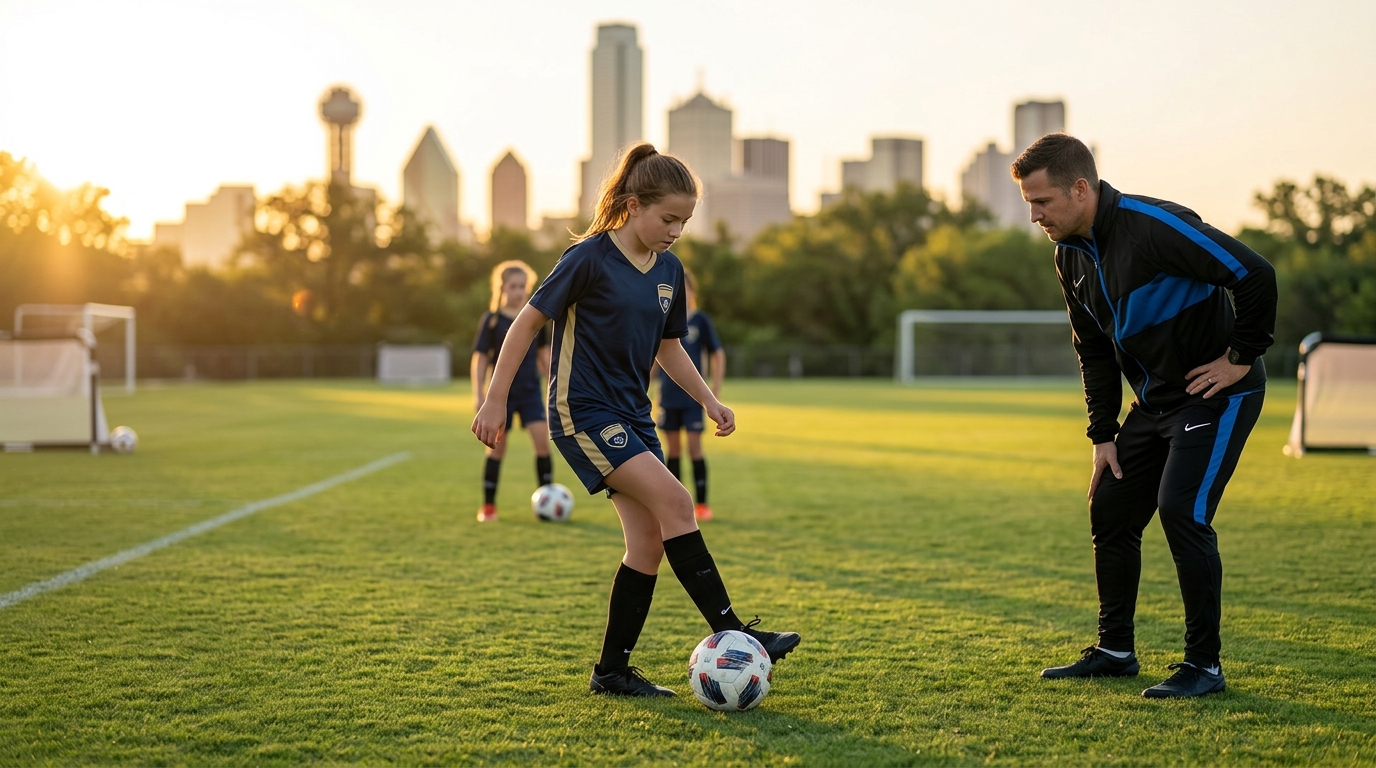
What to Look for in a DFW Youth Soccer Training Program
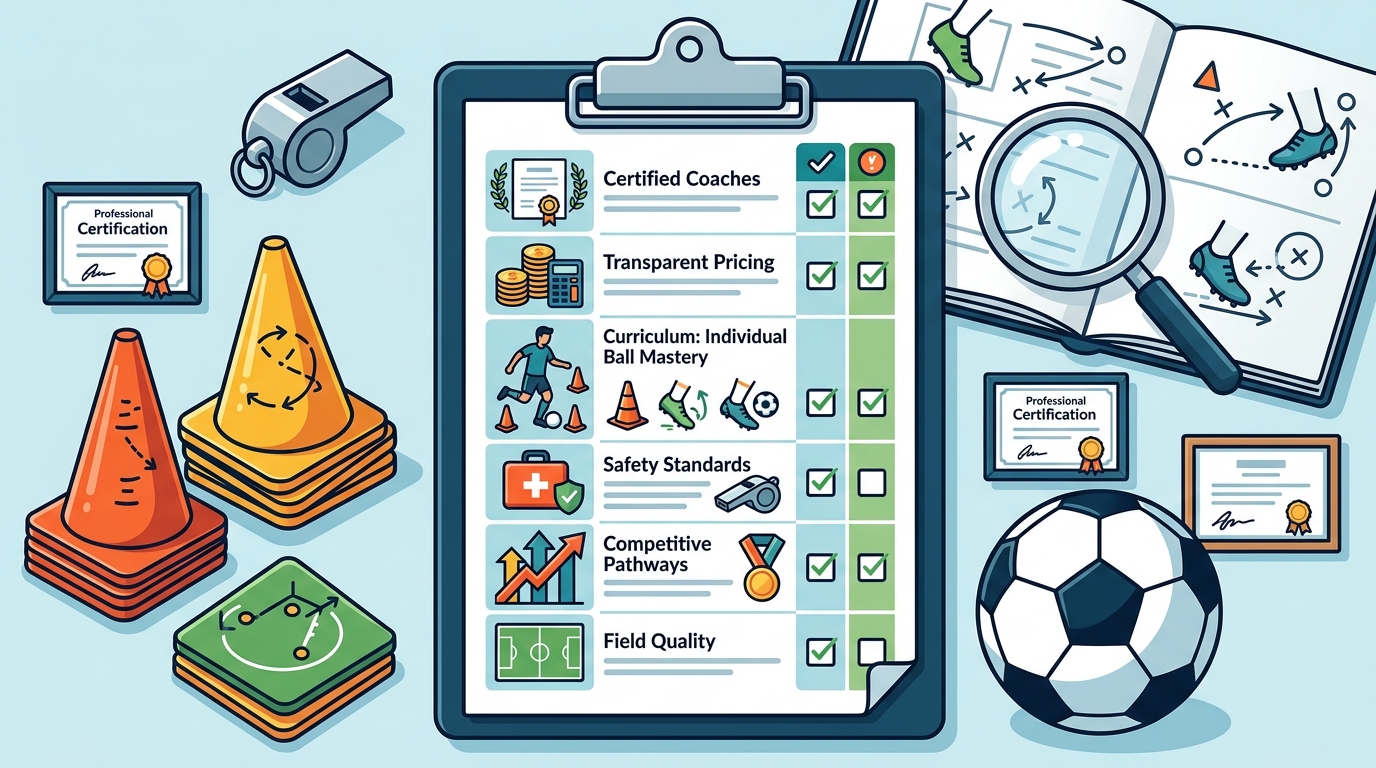
When choosing a youth soccer training program in the Dallas-Fort Worth area, prioritize certified coaches, transparent pricing, and a curriculum focused on individual ball mastery. Global Futbol Training provides a framework for evaluating these factors. This guide covers 13 critical areas, from safety standards to competitive pathways, helping parents and players make informed decisions.
Coach Certifications
Coach certifications are formal credentials that verify a trainer's knowledge of soccer tactics, player development, and safety protocols. In the DFW market, look for coaches who hold current U.S. Soccer coaching licenses. These licenses ensure the instructor understands the latest technical standards and age-appropriate training methods. A certified coach is better equipped to design sessions that improve skills without causing physical strain.
Why Certifications Matter
Certifications provide a baseline of competence. They indicate that the coach has passed exams and completed required training hours. For parents, this reduces the risk of poor instruction. It also signals a commitment to professional growth. Coaches who maintain their certifications are likely to stay updated on industry best practices. according to Eligible Training Providers
Player Development Philosophy
Player development philosophy is the underlying belief system that guides how a program approaches training. Some programs focus solely on match results, while others prioritize long-term technical growth. A strong philosophy balances competition with individual skill acquisition. It should emphasize that technical ability is the foundation of all soccer success. according to An evidence based
Long-Term vs. Short-Term Focus
Short-term programs often push players into high-pressure environments too early. This can lead to burnout and poor technique. Long-term development focuses on building confidence and mastery. It allows players to progress at their own pace. This approach is crucial for retaining players in the sport through their teenage years.
Program Safety Standards
Program safety standards are the protocols and policies in place to protect players from injury and harm. This includes background checks for all staff, clear emergency action plans, and proper supervision ratios. Safety is not just about physical health; it also involves creating a respectful and inclusive environment. Parents should ask about the program's safety record and how they handle incidents.
Supervision and Ratios
Supervision ratios determine how many players one coach oversees. Lower ratios allow for more individual attention. This is critical for correcting technique and ensuring safety. Programs with high ratios may struggle to monitor every player. Look for programs that maintain small group sizes for technical training.
Cost Transparency
Cost transparency is the practice of clearly communicating all fees, including registration, equipment, and travel costs. Hidden fees can lead to unexpected financial burdens for families. A reputable program will provide a detailed breakdown of expenses upfront. This allows parents to budget effectively and compare options fairly.
Value vs. Price
Price does not always equal quality. Some expensive programs offer limited individual attention. Others provide high-quality training at a moderate cost. Evaluate the value proposition by looking at the coach-to-player ratio and the curriculum depth. Transparent pricing builds trust and ensures there are no surprises.
Facility Location
Facility location is the physical setting where training takes place. In DFW, convenience is a major factor for families. Proximity to home or school reduces travel time and fatigue. Look for facilities with well-maintained turf and adequate space for drills. A good location also includes easy parking and accessibility for players with disabilities.
Indoor vs. Outdoor Options
Indoor facilities provide a controlled environment for technical work. They are ideal for ball mastery and small-sided games. Outdoor fields are necessary for match play and endurance training. A comprehensive program may offer both. Access to indoor space allows for consistent training regardless of weather conditions.
Competition Level Matching
Competition level matching is the process of placing players in leagues or teams that align with their current skill set. Mismatched competition can lead to frustration or complacency. Players who are too advanced for their team may become bored. Those who are too behind may lose confidence. Proper matching ensures players are challenged but not overwhelmed.
Assessment Methods
Programs should use objective assessments to determine player level. This may include skill tests, game observation, and coach evaluations. Subjective opinions alone are not sufficient. A structured assessment process helps ensure fair placement. It also allows for adjustments as players improve.
Coach Credentials
Coach credentials are the professional background and experience of the training staff. This includes playing history, coaching experience, and educational qualifications. A coach with a professional playing background often has a deeper understanding of the game. However, playing experience alone is not enough. Coaches must also have the ability to teach and communicate effectively.
Experience with Youth
Experience with youth players is distinct from coaching adults. Youth coaches must be patient, creative, and adaptable. They should understand child development and motivation. Look for coaches who have specific experience working with the age group your child is in. This ensures the training methods are appropriate and engaging.
Age Appropriate Curriculum
Age appropriate curriculum is a structured plan that aligns training activities with the physical and cognitive development stages of players. Younger players need more fun and basic skills. Older players can handle complex tactics and higher intensity. A well-designed curriculum progresses logically, building on previous skills. It avoids introducing concepts that are too advanced for the player's developmental stage.
Developmental Stages
Developmental stages refer to the phases of physical and mental growth. For example, children aged 6-8 are in the early fundamental stage. They focus on basic movement and ball control. Adolescents aged 12-14 are in the intermediate stage, where they can learn tactical concepts. Aligning the curriculum with these stages maximizes learning and enjoyment.
Ball Mastery Training
Ball mastery training is the dedicated practice of controlling the ball with precision and confidence. It is the cornerstone of technical soccer development. Players who master the ball can perform under pressure and make better decisions. This type of training involves repetitive drills that build muscle memory. It should be a core component of any serious youth program.
Technique and Confidence
Technique is the physical execution of skills. Confidence is the mental belief in one's ability to perform them. Ball mastery training addresses both. As players improve their technique, their confidence grows. This positive feedback loop is essential for long-term development. Programs that prioritize ball mastery help players feel comfortable with the ball at all times.
Safe Facilities
Safe facilities are training environments that are free from hazards and equipped with proper safety measures. This includes well-maintained turf, clear boundaries, and accessible emergency exits. The surface should be appropriate for the activities being performed. For example, indoor turf should be clean and free of debris. Outdoor fields should be level and free of holes.
Maintenance and Inspection
Regular maintenance and inspection are critical for facility safety. Programs should have a schedule for checking equipment and surfaces. Any issues should be addressed promptly. Parents can ask about the facility's maintenance protocols. A well-maintained facility reflects a program's commitment to player safety.
DFW Logistics
Scheduling Flexibility
Scheduling flexibility is important for balancing soccer with school and other activities. Programs that offer multiple time slots are more accommodating. They should also have a clear policy for rescheduling missed sessions. Flexibility helps maintain consistency in training. It also reduces stress for families.
Program Philosophy
Program philosophy is the set of values and principles that guide the organization's operations. It influences how coaches interact with players and how the program is structured. A positive philosophy emphasizes respect, hard work, and enjoyment. It creates a supportive environment where players feel valued. Look for programs that align with your family's values.
Communication and Feedback
Communication and feedback are key components of a positive program philosophy. Coaches should provide constructive feedback that helps players improve. They should also communicate regularly with parents about progress. Open lines of communication build trust and ensure everyone is on the same page. It helps address any concerns early.
Competitive Pathways
Competitive pathways are the routes available for players to advance to higher levels of soccer. This includes college, professional, and national team opportunities. A good program should have a clear pathway for players who wish to compete at a high level. It should provide the necessary exposure and development to reach these goals. Not all players will pursue competitive pathways, but the option should be available.
Exposure and Recruitment
Exposure and recruitment are the processes by which players are identified by colleges and professional teams. Programs can facilitate this by organizing showcase events and providing highlight videos. They should also have relationships with recruiters. Access to these opportunities can make a significant difference in a player's career. It provides a clear direction for their development.
Key Takeaways
- Verify coach certifications and credentials to ensure professional instruction.
- Look for a player development philosophy that prioritizes long-term growth over short-term results.
- Assess program safety standards, including background checks and supervision ratios.
- Ensure cost transparency to avoid hidden fees and budget effectively.
- Consider facility location and logistics to minimize travel time and fatigue.
- Check for age-appropriate curriculum that aligns with developmental stages.
- Prioritize ball mastery training to build technical confidence and skill.
- Evaluate competitive pathways for players aiming for college or professional soccer.
Frequently Asked Questions
What is the most important factor in a youth soccer training program?
The most important factor is the quality of coaching. A skilled and certified coach can make a significant difference in a player's development. They provide the guidance and feedback necessary for improvement.
How much should I expect to pay for a youth soccer training program in DFW?
Costs vary widely depending on the program's intensity and duration. Look for transparent pricing that includes all fees. Compare the value offered, such as coach-to-player ratios and curriculum depth.
Is ball mastery training necessary for all players?
Yes, ball mastery is fundamental for all players, regardless of position. It builds confidence and technical skill, which are essential for success at any level of soccer.
How do I know if a program is safe?
Check for background checks, emergency action plans, and proper supervision ratios. Ask about the program's safety record and how they handle incidents. A reputable program will have clear safety protocols in place.
What is the difference between a club and a training program?
A club focuses on team competition and league play. A training program focuses on individual skill development. Some programs offer both, but their primary goals differ. Training programs are ideal for improving technical skills.
How often should my child attend training sessions?
Frequency depends on the player's age and goals. For serious development, 2-3 sessions per week is common. Consistency is key to seeing improvement. Discuss the recommended frequency with the program.
Can I visit a facility before enrolling my child?
What should I look for in a coach's background?
Look for playing experience, coaching certifications, and experience with youth players. A coach with a professional background and current certifications is a strong candidate. They should also have good communication skills.
Conclusion
Choosing the right youth soccer training program in DFW requires careful consideration of multiple factors. From coach certifications to competitive pathways, each element plays a role in your child's development. Global Futbol Training offers a comprehensive approach to player development, focusing on ball mastery and long-term growth. Explore their programs to find the right fit for your player. according to eCFR 20 CFR