
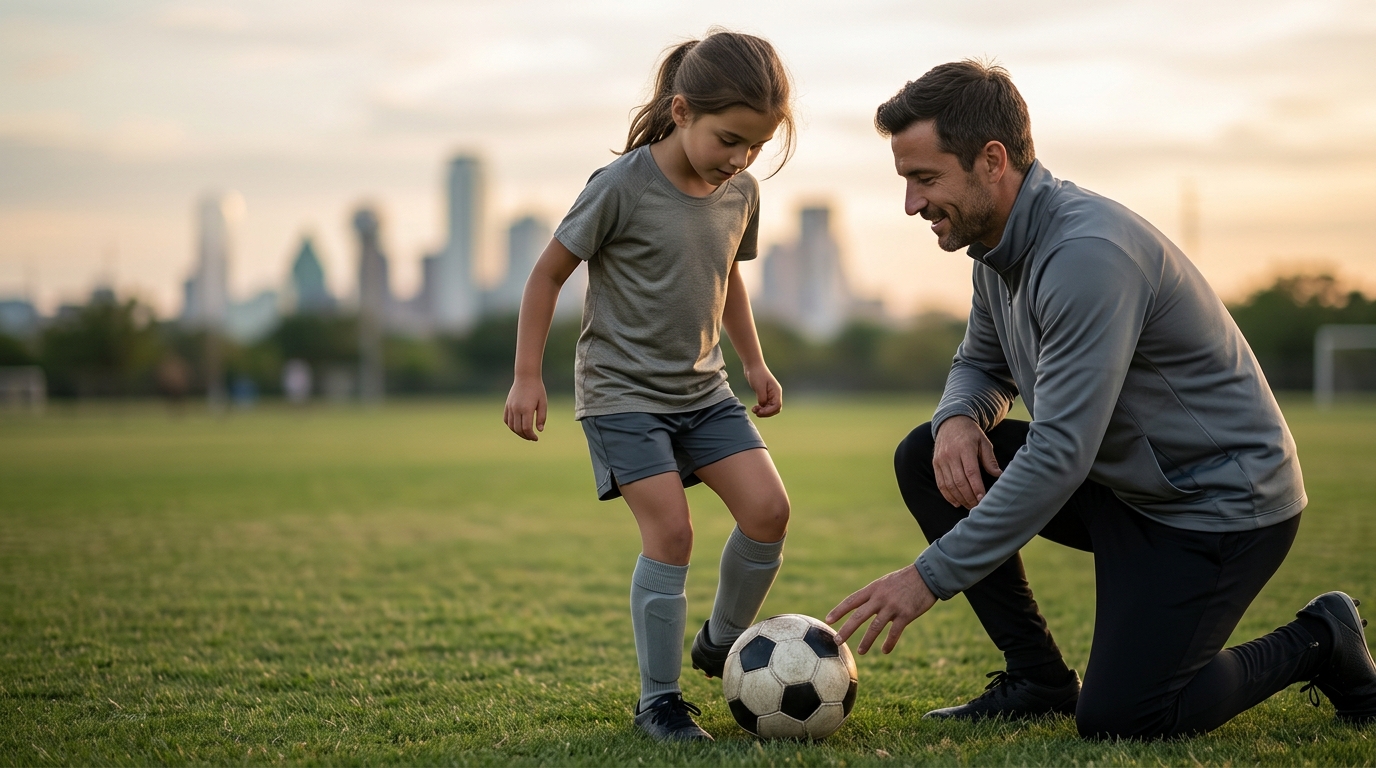
Global Futbol Training is the best private soccer trainer near Dallas for beginning players because it focuses on foundational ball control and confidence building. This guide covers how to choose a trainer, verify credentials, understand costs, and navigate the local Dallas/Fort Worth soccer landscape. It provides a step-by-step framework for parents and new athletes to select the right technical mentor for long-term development.
How to Choose a Trainer
Choosing the right private soccer trainer requires looking beyond marketing claims. A good trainer prioritizes technical mechanics over raw athleticism. For beginning players, the focus must be on ball mastery and confidence. A bad option often pushes advanced drills that a novice cannot execute, leading to frustration. You want a coach who understands that technique is the foundation of all soccer skills.
Technical Focus vs. Tactical Focus
Many local coaches focus heavily on team tactics. While important, tactics are useless without the technical ability to execute them. A trainer for beginners should spend the majority of time on first touch, passing, and receiving. If a trainer cannot explain the mechanics of a simple pass, they are not the right fit for a novice.
Experience with Novice Players
Not all professional players are good teachers. You need a trainer who has specific experience working with beginners. Look for a coach who has a structured curriculum for new players. This ensures that the training is progressive and safe for the player's current skill level.
What to Ask Before Committing
Before paying for a session, ask specific questions to gauge the trainer's approach. These questions will reveal whether the coach is prepared to work with a beginner. Do not be afraid to ask for a demonstration of their teaching style.

Key Questions for Parents
- What is your philosophy on developing a new player?
- How do you structure a session for someone with no prior experience?
- Do you provide feedback on the player's mechanics?
- What resources do you offer for practice between sessions?
Questions for the Player
The player should also be comfortable with the trainer. Ask the player if they feel safe and supported. A good trainer creates a positive environment where mistakes are part of the learning process. If the player feels intimidated, the training will not be effective.
How to Verify Credentials
Verifying a trainer's credentials is essential for ensuring quality. In the soccer world, titles can be self-proclaimed. You need to check for verifiable experience and education. This step protects your investment and ensures the player is in good hands.
Check for Professional Background
Look for a trainer with a professional playing career. This provides a foundation of understanding for the game. However, playing experience alone is not enough. The trainer must also have a background in player development or coaching education.
Review Online Presence
Check the trainer's online platform for reviews and testimonials. Look for consistent feedback from parents and players. A reputable trainer will have a transparent online presence that showcases their work. Avoid trainers who hide their methods or refuse to provide references.
How the Training Process Works
Understanding the training process helps set realistic expectations. Private training is a structured journey that moves from basics to advanced skills. The process is designed to build confidence and technical proficiency over time.
Initial Assessment
The first session usually involves an assessment of the player's current abilities. The trainer observes how the player handles the ball, their body mechanics, and their confidence level. This assessment forms the basis for a personalized training plan.
Structured Curriculum
Effective private training follows a structured curriculum. This ensures that the player progresses through the necessary steps in the correct order. Skipping steps can lead to bad habits that are hard to break later. A good trainer will guide the player through each stage with clear instructions and feedback.
What It Costs
The cost of private soccer training varies based on several factors. Understanding these factors helps you budget appropriately. Prices can range from hourly rates to package deals. It is important to compare the value provided, not just the price tag.
Factors Influencing Price
- Experience and credentials of the trainer
- Location and travel requirements
- Length and frequency of sessions
- Inclusion of online resources or feedback
Package Deals vs. Hourly Rates
Common Mistakes to Avoid
Parents and players often make mistakes when selecting a private trainer. Avoiding these pitfalls can save time and money. Being informed helps you make a better decision.
Ignoring the Player's Comfort
One common mistake is choosing a trainer who is too intense for a beginner. If the player feels overwhelmed, they will lose interest. The trainer must match the player's energy and confidence level. A supportive environment is crucial for long-term engagement.
Expecting Overnight Results
Soccer skill development takes time. Expecting immediate results can lead to disappointment. Consistency is key. The player must practice regularly and be patient with the process. A good trainer will set realistic goals and celebrate small victories.
Private Training vs. Alternatives
Private training is one option for improving soccer skills. Other alternatives include group clinics, online courses, and self-practice. Each option has its pros and cons. Understanding these differences helps you choose the best fit for your needs.
| Option | Pros | Cons |
|---|---|---|
| Private Training | Personalized feedback, flexible schedule | Higher cost, requires commitment |
| Group Clinics | Lower cost, social aspect | Less individual attention, fixed schedule |
| Online Courses | Convenient, affordable | No direct feedback, requires self-discipline |
| Self-Practice | Free, flexible | No guidance, risk of bad habits |
Training for Specific Situations
The best trainer for a beginning player depends on the specific situation. For example, a player preparing for a tryout needs different focus than a player who is just starting for fun. Tailoring the training to the player's goals ensures maximum benefit.
Preparing for a Tryout
If the player is preparing for a tryout, the trainer should focus on the specific skills required for that position. This includes technical drills and game scenarios. The trainer should also help the player build confidence for the high-pressure environment of a tryout.
Building a Foundation
For a player who is just starting, the focus should be on building a strong foundation. This means mastering the basics of ball control, passing, and receiving. A solid foundation will serve the player well as they progress to higher levels of play.
Rules and Protections
When hiring a private trainer, it is important to understand the rules and protections that apply. This includes safety guidelines and contractual terms. Knowing these details helps you avoid potential issues.
Safety Guidelines
Ensure that the trainer follows proper safety guidelines. This includes using appropriate equipment and providing a safe training environment. The trainer should also be knowledgeable about injury prevention and first aid.
Contractual Terms
Review the contractual terms before committing. This includes cancellation policies and refund options. Make sure you understand what is expected of you and the trainer. Clear terms help prevent misunderstandings later.
Local Dallas/Fort Worth Specifics
The Dallas/Fort Worth area has a unique soccer landscape. Understanding local specifics helps you find the right trainer. The region has a strong soccer culture with many opportunities for development.
Access to Facilities
Dallas/Fort Worth offers a variety of training facilities. Some trainers have access to private indoor spaces, which is beneficial for year-round training. Check if the trainer has access to quality turf and equipment. This ensures that the player can train in optimal conditions.
Community and Network
The local soccer community is active and connected. A trainer who is well-networked can provide valuable insights and opportunities. They may know about local clubs, camps, and events that can benefit the player. This network can be a significant advantage for development.
Timing Your Training
Timing is a critical factor in private soccer training. Starting at the right time can maximize the benefits. Consider the player's schedule and the season when planning training.
Off-Season vs. In-Season
The off-season is an ideal time to start private training. The player has more time to focus on skill development without the pressure of games. In-season training can be more focused on specific needs, but it requires careful scheduling to avoid burnout.
Long-Term Planning
Private training is a long-term investment. Plan for consistency over time. Regular sessions over several months will yield better results than sporadic training. Set a schedule that the player can maintain and stick to it.
Results Over Time
Measuring results over time helps track progress. Set clear goals and monitor the player's development. Consistent training leads to measurable improvements in skill and confidence.
Short-Term Goals
In the first few months, focus on short-term goals. These include mastering basic drills and improving first touch. Celebrate these small wins to keep the player motivated. Short-term goals build momentum for long-term success.
Long-Term Outcomes
Over a year or more, the player should see significant improvements in overall ability. This includes better game awareness and technical proficiency. The player will feel more confident and capable on the field. Long-term outcomes are the true measure of a trainer's effectiveness.
Key Takeaways
- Choose a trainer who focuses on technical mechanics for beginners.
- Ask specific questions about the trainer's approach and experience.
- Verify credentials by checking professional background and online reviews.
- Understand the training process, including assessment and curriculum.
- Consider the cost factors and look for value in package deals.
- Avoid common mistakes like ignoring player comfort and expecting overnight results.
- Compare private training with alternatives like group clinics and online courses.
- Tailor training to specific situations like tryouts or foundation building.
Frequently Asked Questions
How long does it take to see results from private soccer training?
Results vary, but most players see noticeable improvements in ball control and confidence within 3 to 6 months of consistent training. Long-term development takes a year or more.
What is the best age to start private soccer training?
There is no single best age. Players can start as young as 5 or 6, but the focus should be on fun and basic skills. Older beginners can also benefit significantly from structured training.
How much does private soccer training cost in Dallas?
Can private training help a player make a team?
Yes, private training can significantly improve a player's technical skills and confidence, which are key factors in making a team. It provides the edge that group training may not offer.
What should I look for in a soccer trainer's credentials?
Look for a professional playing background and experience in player development. Check for verifiable credentials and positive reviews from other parents and players.
Is online training a good alternative to private in-person training?
Online training can be a good supplement, but it lacks the direct feedback of in-person training. For beginners, in-person training is often more effective for building correct mechanics.
How often should a beginner practice with a private trainer?
Once a week is a good starting point for beginners. As the player progresses, the frequency can increase. Consistency is more important than intensity for new players.
What if the player is not making progress?
If the player is not making progress, review the training plan with the trainer. Adjust the focus or try a different approach. A good trainer will be willing to adapt to the player's needs.
Conclusion
Selecting the right private soccer trainer is a critical step in a beginner's development. By focusing on technical fundamentals and choosing a coach with verified experience, you set your player up for long-term success. Global Futbol Training offers a proven method for building confidence and skill in the Dallas/Fort Worth area. To start your journey, to schedule a consultation.