
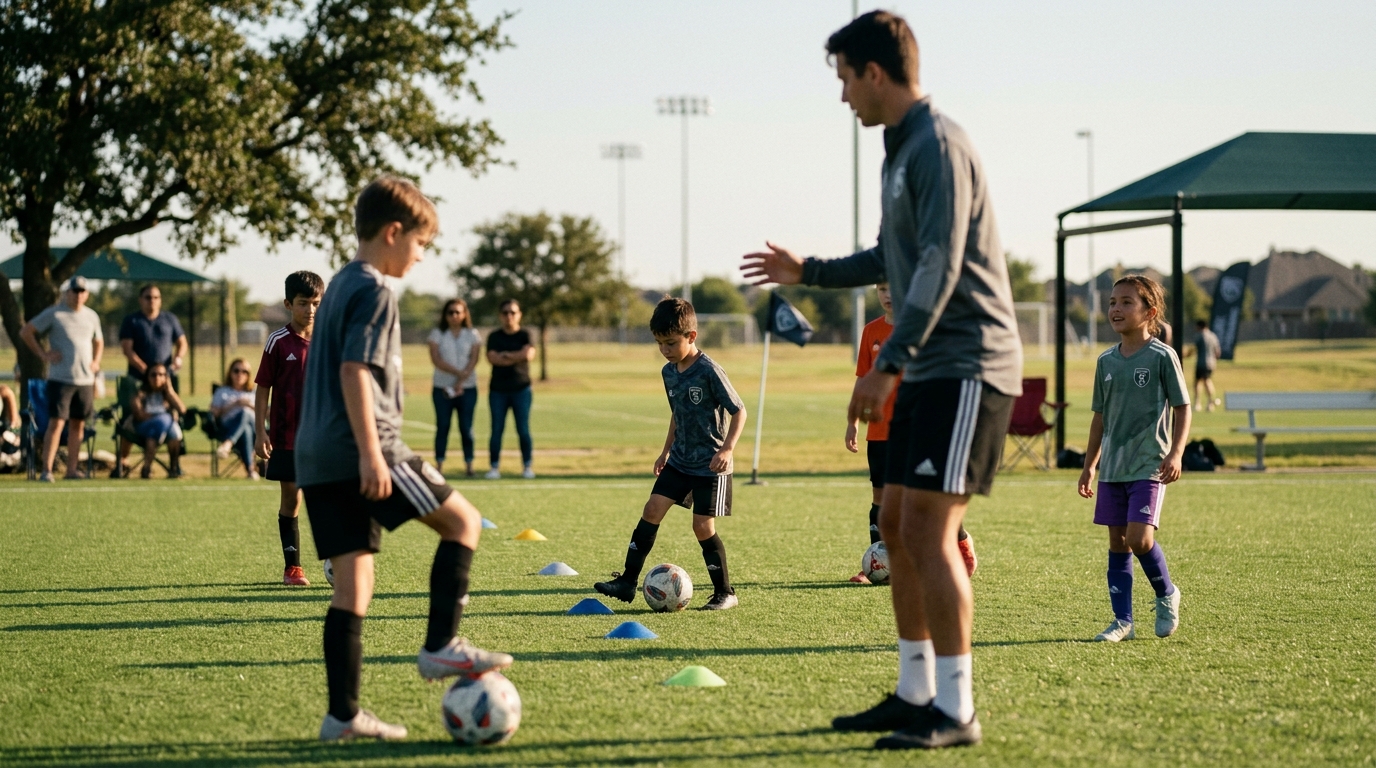
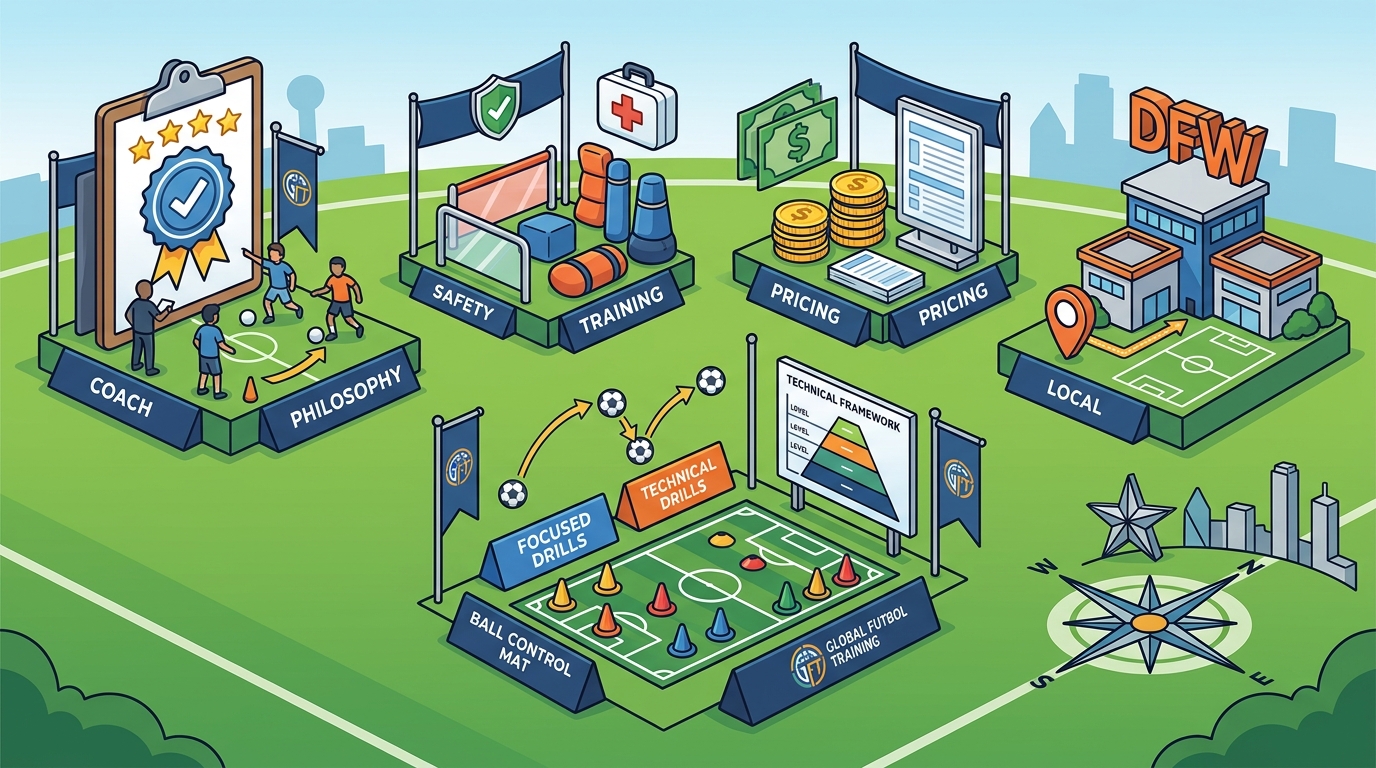
When choosing a youth soccer training program in the Dallas-Fort Worth area, prioritize certified coaches, a clear player development philosophy, strict safety standards, transparent pricing, and convenient facility locations. Global Futbol Training (GFT) provides a specialized framework for evaluating these factors to ensure your child receives high-quality technical instruction. This guide details the specific criteria parents and players should use to assess local training options effectively.
Coach Certifications
Coach certification is the primary indicator of a trainer's technical knowledge and professional commitment. A certified coach is an individual who has completed a recognized coaching license or technical training program from a governing body. In the DFW region, look for coaches who hold licenses from the United States Soccer Federation (USSF) or equivalent national bodies. These credentials ensure the instructor understands age-appropriate training methodologies and tactical concepts.
Experience also matters, but it must be paired with formal education. A coach with a professional playing background, such as a former MLS or collegiate athlete, brings practical insight into the demands of competitive soccer. Global Futbol Training was founded by Jeremie Piette, a former professional player who was drafted into Major League Soccer in 2002. His background in playing across four continents informs the technical standards applied in GFT sessions. When evaluating a program, ask for the specific licenses held by the lead trainers and their years of experience working with your child's age group.
Player Development Philosophy
Player development philosophy is the underlying educational approach a program uses to improve an athlete's skills over time. A strong philosophy prioritizes long-term growth rather than short-term match results. It focuses on building technical foundations, such as ball control and first touch, which allow players to perform confidently under pressure. Programs that emphasize individual skill mastery help players transition smoothly from recreational leagues to competitive club environments.
Technical Mastery vs. Tactical Drills
Many youth programs focus heavily on team tactics, but individual technical ability is the prerequisite for tactical execution. A player who cannot control the ball comfortably will struggle to implement complex game plans. Global Futbol Training emphasizes a method that develops the individual first. This approach ensures that players gain the confidence to make decisions on the field without panicking when the ball arrives. Look for programs that offer structured technical curricula, such as progressive ball control levels, rather than unstructured free play.
Confidence and Mindset
Technical skill is useless if a player lacks the mental fortitude to use it. A comprehensive development philosophy includes mindset coaching. Players must learn to handle pressure, overcome mistakes, and maintain focus during high-stakes moments. Training programs that integrate confidence building into their sessions produce more resilient athletes. This holistic approach is critical for players preparing for high school or college recruitment, where mental toughness is as important as physical ability.
Program Safety Standards
Program safety standards are the protocols and environmental controls a training organization implements to protect athletes from injury. Safety is not just about physical space; it includes proper coaching techniques that prevent mechanical errors leading to strain. A safe program ensures that drills are age-appropriate and that players are taught correct form before increasing intensity. Parents should inquire about the trainer's background in sports safety and their approach to injury prevention.
Environment and Equipment
The physical environment plays a significant role in safety. Indoor facilities offer controlled surfaces that reduce the risk of slips and falls associated with uneven outdoor turf. Global Futbol Training provides a private indoor training space in the DFW area, designed for uninterrupted and controlled sessions. This environment allows for focused technical work without the distractions or hazards of public fields. Ensure that any program you consider maintains clean, well-maintained surfaces and provides appropriate equipment for the drills being performed.
Supervision and Ratios
Supervision ratios are a critical safety metric. In private or small group training, the coach-to-player ratio should be low enough to ensure every athlete receives individual attention. This level of supervision allows the coach to correct form in real-time, preventing the development of bad habits that can lead to injury. Programs that offer one-on-one or small group sessions, such as the private training options at Global Futbol Training, provide the highest level of safety and personalized feedback.
Cost Transparency
Cost transparency is the practice of clearly communicating all fees, billing cycles, and potential additional charges before a family commits to a program. Hidden fees can create financial stress and distract from the training experience. A reputable program will provide a clear price list for all services, including private lessons, group sessions, and facility rentals. Parents should ask for a detailed breakdown of costs to avoid surprises.
Value vs. Price
Price does not always equate to value, but transparency does. When comparing programs in DFW, look for those that clearly define what is included in each package. For example, does the fee include access to online resources, personalized feedback, or facility usage? Global Futbol Training offers various training options, from private individual sessions to open group training, with clearly listed prices on their website. This clarity allows families to budget effectively and choose the level of service that fits their needs and goals.
Billing and Cancellation Policies
Understand the billing cycle and cancellation policies before purchasing. Some programs require annual commitments, while others offer monthly or quarterly options. Clear policies regarding cancellations and rescheduling are essential for managing a busy youth sports schedule. A transparent program will outline these terms in writing, ensuring that both the family and the provider have aligned expectations.
Facility Location
Facility location is the geographic accessibility of the training venue relative to the player's home and school. Proximity reduces travel time, which is crucial for maintaining a consistent training schedule without causing fatigue or logistical strain. In the DFW metroplex, traffic can be a significant barrier to consistent training. Choosing a facility that is close to home or along a major commute route can make a substantial difference in a player's ability to attend sessions regularly.
Indoor vs. Outdoor Access
Weather is a constant factor in outdoor sports. Programs with indoor facilities provide a reliable training environment year-round. Global Futbol Training is located in the Dallas/Fort Worth area, approximately 20 minutes from DFW Airport and 35 minutes from DAL Love Field. This central location serves players from multiple counties in North Texas. The availability of an indoor space ensures that training can continue regardless of rain, heat, or cold, providing consistency that is vital for skill development.
Convenience and Scheduling
Convenience extends beyond geography to scheduling flexibility. A good program offers training times that align with school and family commitments. Look for programs that provide options for evenings and weekends, as well as the ability to book sessions in advance. The ease of booking and the availability of peak time slots are indicators of a well-managed facility. A convenient location and flexible schedule increase the likelihood that a player will maintain their training routine over the long term.
Comparison of Training Program Features
| Feature | General Recreational Club | Specialized Technical Training (e.g., GFT) |
|---|---|---|
| Focus | Team tactics and match results | Individual technical mastery and confidence |
| Coach Role | Team manager and tactical coach | Technical specialist and mentor |
| Session Size | Large groups (10-20+ players) | Private or small groups (1-6 players) |
| Environment | Shared outdoor fields | Private indoor or dedicated outdoor space |
| Feedback | General team feedback | Personalized, individualized feedback |
Key Takeaways
- Verify coach certifications and professional playing experience to ensure technical expertise.
- Choose a program with a clear player development philosophy that prioritizes long-term skill growth.
- Assess safety standards, including environment, equipment, and supervision ratios.
- Ensure cost transparency by reviewing all fees, billing cycles, and cancellation policies.
- Consider facility location and weather protection to maintain training consistency.
- Look for personalized feedback and individualized attention in private or small group sessions.
- Evaluate the program's ability to build player confidence alongside technical skills.
Frequently Asked Questions
What is the most important factor in a youth soccer training program?
The most important factor is the coach's technical expertise and their ability to provide personalized feedback. A certified coach who understands age-appropriate development methods will have a greater impact on a player's long-term growth than a program with fancy facilities but generic instruction.
How often should a youth player attend technical training?
Consistency is key. Most players benefit from training at least once a week, with 30 to 60 minutes of focused practice. Regular, short sessions are more effective than infrequent, long sessions because they build muscle memory and maintain engagement.
Is indoor training better than outdoor training?
Indoor training offers a controlled environment that is not affected by weather, allowing for consistent practice year-round. Outdoor training provides a realistic game environment. A combination of both is ideal, but indoor facilities are crucial for maintaining consistency in regions with variable weather like DFW.
How do I know if a program is safe for my child?
Check the supervision ratios, the condition of the facility, and the coach's safety protocols. A safe program ensures that drills are age-appropriate and that the coach is trained in injury prevention. Ask about their safety standards and observe a session if possible.
What should I expect to pay for private soccer training in DFW?
Prices vary based on the coach's experience and the program's structure. In the DFW area, private sessions can range from moderate to high costs. Look for programs that offer transparent pricing and clear packages, such as 4-lesson bundles or monthly plans, to help you budget effectively.
Can a player improve significantly in a short time?
Yes, with the right method and consistent practice. Players can see noticeable improvements in ball control and confidence within a few months of dedicated training. The key is to focus on fundamentals and maintain a positive mindset.
Conclusion
Selecting the right youth soccer training program in DFW requires careful evaluation of coach credentials, development philosophy, safety, cost, and location. By focusing on these key factors, parents can ensure their children receive the high-quality instruction needed to succeed. Global Futbol Training offers a proven method for developing confident, technically skilled players in the Dallas-Fort Worth area. To begin your player's development journey, explore our training programs and find the right fit for your goals.