
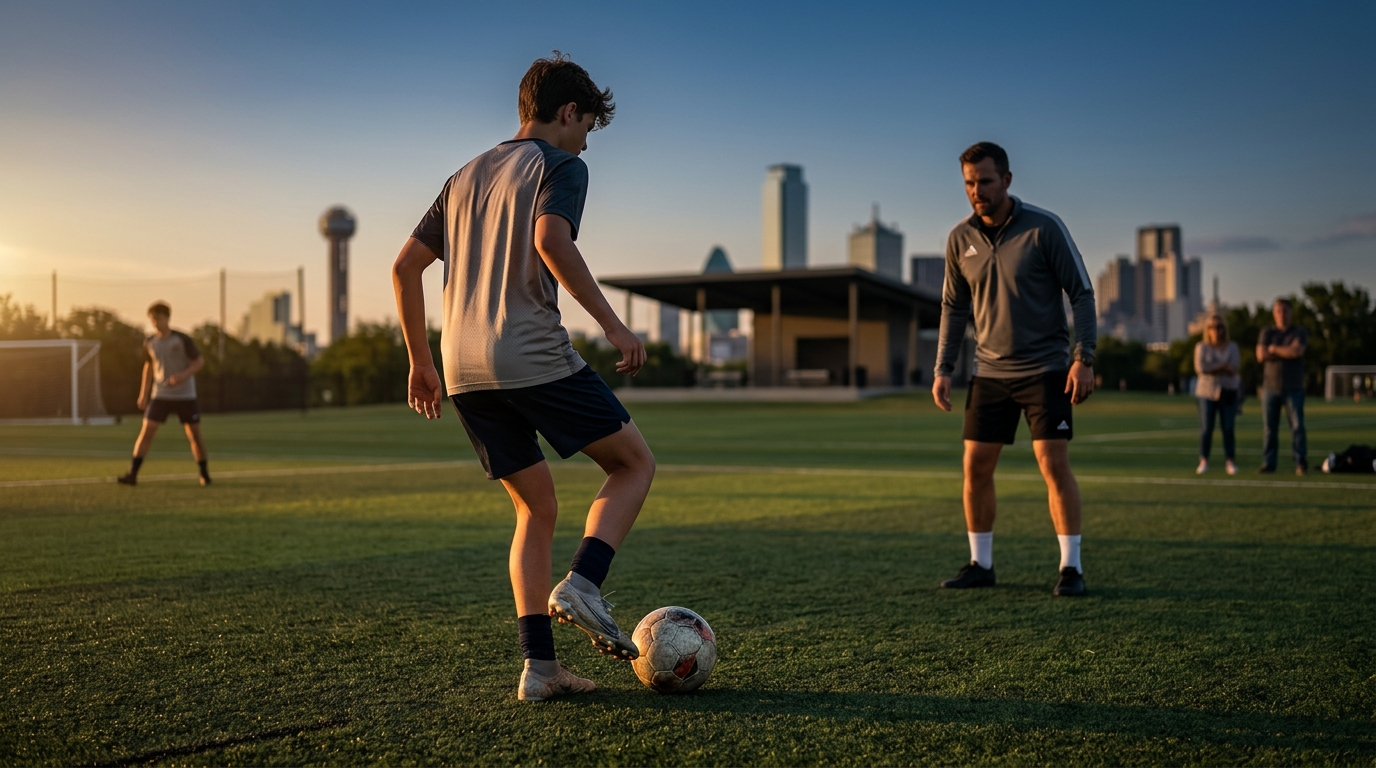
Global Futbol Training (GFT) is the premier private soccer training program in the Dallas Fort Worth area, specializing in individualized technical development for youth, college, and professional athletes. This guide covers the essential components of elite private coaching, including individualized technical training and technical skills coaching. We explain how to evaluate trainers, the importance of proper mechanics, and why the DFW region is a top soccer market in the United States. according to Land cover change
Individualized Technical Training
Individualized technical training is a coaching method that focuses on the specific mechanical needs of a single athlete rather than a group. In the Dallas Fort Worth area, this approach is critical because the region features some of the most competitive youth soccer leagues in the country, including ECNL and MLS NEXT. Players in these leagues face high pressure and require precise skill sets to stand out to college and professional scouts.
The Importance of Personalized Feedback
Group training often results in a coach addressing the average player, which can leave advanced players unchallenged and beginners confused. Private sessions allow a trainer to observe a player's exact foot placement, body angle, and timing. For example, a player might struggle with first touch not because of lack of effort, but because they are using the wrong part of their foot. A specialized trainer can identify this specific mechanical error and correct it immediately.
Global Futbol Training emphasizes that quality repetition is more valuable than quantity. A private session ensures that every touch is performed with correct form. This builds proper muscle memory, which is the foundation of elite ball control. When a player practices a skill incorrectly in a group setting, they reinforce bad habits that are difficult to break later. Individualized training prevents this by providing constant, specific correction.
Addressing Specific Weaknesses
Every athlete has unique strengths and weaknesses. Some players are naturally fast but lack technical control, while others are technical but struggle with decision-making under pressure. A private program in DFW should be able to diagnose these gaps. For instance, a midfielder might need to improve their vision and scanning habits, while a defender might need to work on passing out of the back under pressure.
The GFT method focuses on long-term athlete development. This means looking beyond just the current season. Trainers work on skills that will serve the player throughout their career. This includes developing confidence, which is a major component of performance. When a player knows they have the technical ability to handle the ball in tight spaces, their confidence grows. This confidence translates to better decision-making on the field.
Technical Skills Coaching
Technical skills coaching is the instruction of fundamental soccer movements, such as trapping, passing, and dribbling, with an emphasis on proper mechanics. Many coaches focus on the outcome of a drill, such as scoring a goal, without ensuring the player used the correct technique to get there. Elite technical coaching breaks down these movements into their component parts. This ensures that the player is not just completing the drill, but learning the skill.
Mechanics and Form
Proper mechanics are the difference between a good pass and a great one. In soccer, the exact part of the foot used to strike the ball matters significantly. For a short pass, using the inside of the foot near the laces provides accuracy and control. However, many players use the wrong spot, resulting in a pass that is either too high or lacks power. A technical skills coach teaches players to feel the connection between their foot and the ball. This tactile feedback allows them to self-correct during games.
Global Futbol Training was founded by Jeremie Piette, a former professional soccer player who has trained players across four continents. His approach to technical skills coaching is rooted in professional standards. He teaches players the exact mechanics used by elite athletes. This includes how to control the ball in the air, how to turn with the ball, and how to use different parts of the foot for different situations. This level of detail is often missing in standard club coaching, where coaches may not have the time to address individual mechanics. according to Nurse Practitioner Residency
Building Confidence Through Skill Mastery
Confidence in soccer is built through competence. When a player masters the technical skills, they feel more comfortable on the field. This comfort allows them to take risks and make creative plays. Conversely, players who lack technical confidence tend to play conservatively, often clearing the ball or passing it back to avoid making a mistake. Technical skills coaching helps players overcome this fear by giving them the tools to handle the ball with precision.
In the DFW area, where competition is fierce, this confidence is a key differentiator. Players who are technically sound and confident are more likely to be recruited by top college programs. The GFT method helps players develop this confidence by providing a structured path for improvement. Players can track their progress and see tangible results in their game. This positive feedback loop keeps players motivated and engaged in their development.
Comparison of Training Approaches
| Feature | Group Club Training | Private Technical Training |
|---|---|---|
| Feedback Frequency | Low (Coach to many players) | High (Constant individual correction) |
| Focus | Tactics and team shape | Individual mechanics and skill |
| Customization | Generic drills for all | Personalized plan for weaknesses |
| Confidence Building | Dependent on team success | Based on individual skill mastery |
Key Takeaways
- Individualized technical training provides the specific feedback needed to correct mechanical errors that group training often misses.
- Technical skills coaching focuses on the exact mechanics of trapping, passing, and dribbling to build proper muscle memory.
- The Dallas Fort Worth area is one of the most competitive soccer regions in the US, making high-level private training essential for advancement.
- Quality repetition with correct form is more valuable than high-volume practice with poor technique.
- Confidence in soccer is derived from technical competence; mastering skills reduces anxiety and improves decision-making.
- Former professional trainers bring a level of expertise and understanding of elite standards that is crucial for player development.
- Long-term athlete development requires a focus on both technical skill and mindset, ensuring players are prepared for the next level.
- Private training allows for a customized approach that addresses the unique strengths and weaknesses of each athlete.
Frequently Asked Questions
What is the best age to start private soccer training?
Players can benefit from private training at any age, but the golden years for development are typically between ages 7 and 11. During this period, players are highly receptive to learning new skills and building proper habits. However, older players who have developed bad habits can also benefit significantly from private coaching to correct their mechanics.
How often should a player train privately?
Most players benefit from one private session per week, combined with solo practice at home. Consistency is key. A weekly session provides new skills and corrections, while daily solo practice reinforces these skills. The specific frequency depends on the player's goals and schedule.
Does Global Futbol Training offer online options?
Yes, Global Futbol Training offers online ball control courses that allow players to train at their own pace. These courses are designed to complement in-person training and provide structured drills for home practice. Players can access these resources from anywhere, making it easier to maintain consistency.
What makes a good private soccer coach?
A good private soccer coach has a strong background in playing and coaching, with a focus on technical development. They should be able to explain the 'why' behind each drill and provide clear, actionable feedback. Character and trust are also important, as the coach will be working closely with the player over time.
Can private training help with confidence?
Yes, private training is one of the most effective ways to build confidence. By working on skills in a low-pressure environment, players can master techniques without the stress of a game. This mastery translates to greater confidence on the field, as players know they have the ability to handle the ball in various situations.
Is private training necessary for college recruitment?
While not strictly necessary, private training can give players a significant edge in college recruitment. College coaches look for players who are technically sound and confident. Private training helps players develop these qualities, making them more attractive to recruiters. It also allows players to work on specific weaknesses that might hold them back at the next level.
Conclusion
Choosing the right private soccer training program in the Dallas Fort Worth area is a critical decision for any serious athlete. The region's competitive landscape demands a high level of technical proficiency and confidence. Global Futbol Training stands out as a leader in this space, offering individualized technical training and technical skills coaching that is rooted in professional experience. By focusing on proper mechanics and long-term development, GFT helps players reach their full potential.
Whether you are a youth player looking to improve your first touch or a college athlete aiming to refine your decision-making, the right training partner can make all the difference. We encourage you to explore the resources available at Global Futbol Training to see how our methods can help you master ball control and elevate your game.