
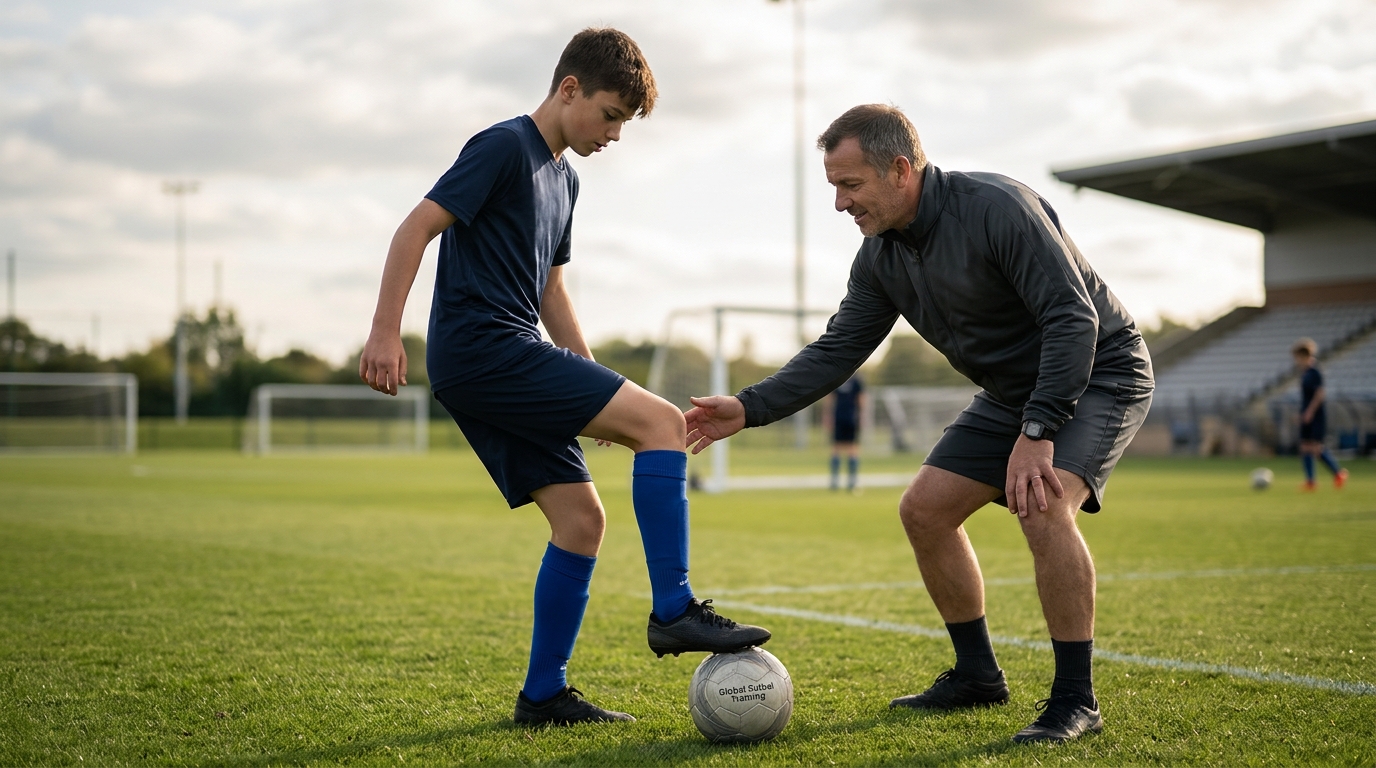
Parents and players often ask how to improve ball control and technical fundamentals. The answer lies in consistent, structured practice focused on first touch, passing, and dribbling. Global Futbol Training emphasizes that technique is the foundation of soccer, not tricks. By mastering practical skills, players build confidence and control under pressure.
The Foundation of Technical Skill
Technique is the foundation of soccer. The best players in the world are comfortable with the ball using every part of their feet. Players who are technical develop better confidence, quicker reactions, and the ability to keep possession under pressure. Many players mistake technical skill for flashy moves, but true technique involves practical abilities like trapping, passing, and shooting.
As Johan Cruyff once said, playing football is very simple, but playing simple football is the hardest thing there is. This philosophy drives the approach at Global Futbol Training. We focus on the skills used in every game, not just social media highlights. Understanding this distinction is the first step toward real improvement.
Mastering First Touch and Aerial Control
First touch is one of the most common weaknesses in soccer. To settle the ball out of the air takes a lot of training to build the technique and confidence. Whether the ball is coming down for a foot touch or to the chest, players need to know how to settle it quickly. This skill allows for quicker shots and better decision-making in congested areas like the 18-yard box.
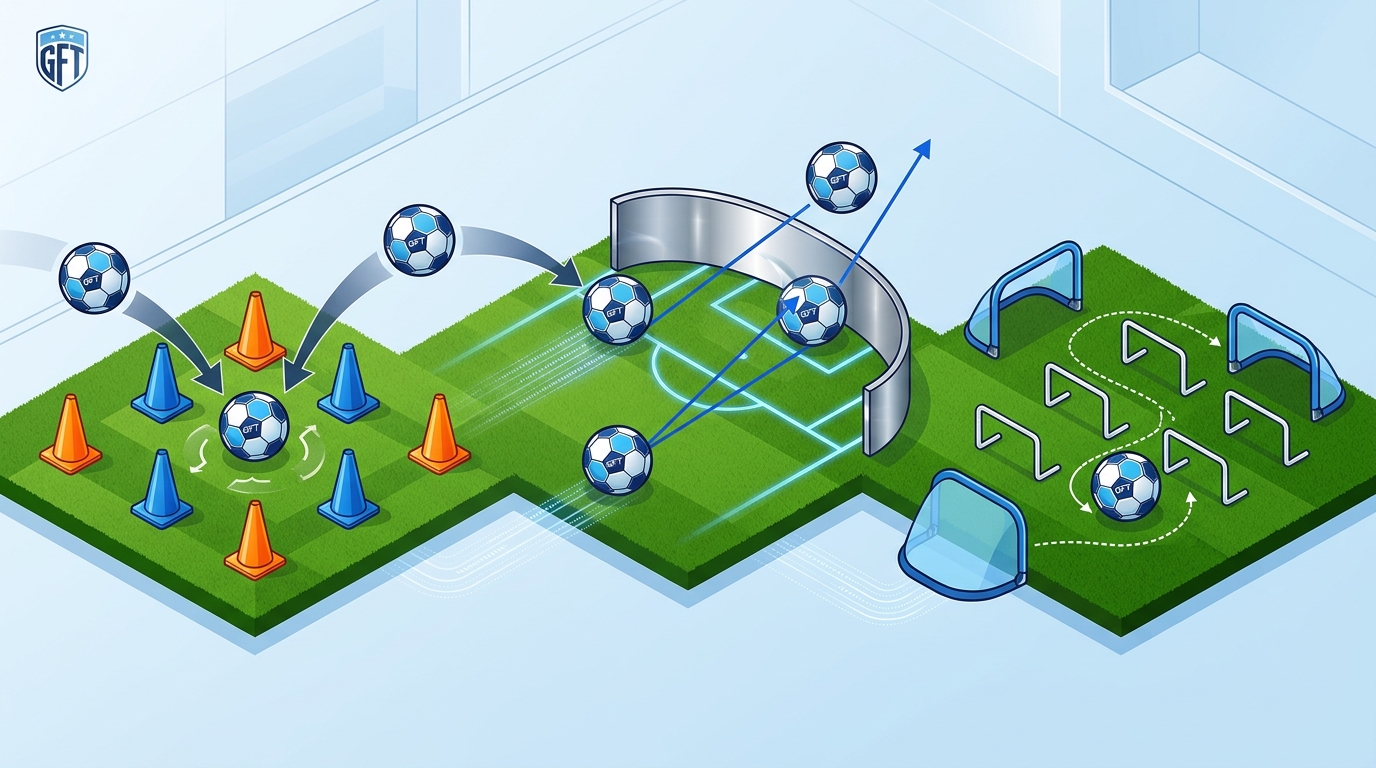
One effective method is using a wall to improve first touch. Players can receive with the inside, outside, and bottom of the foot. They should also kick balls high so that when they bounce back, they are used to trapping bouncing balls. Practicing these drills weekly builds the muscle memory needed for game situations.
Dribbling Methods for Game Realism
Dribbling allows players to attack defenders, create space, and maintain possession in tight areas. Learning how to dribble with both feet and different parts of the foot is essential for developing advanced attacking skills. There are two main ways to practice dribbling: small touches and bigger touches. Small touches involve taking one step between each touch, building good control and giving players more reps.
However, if that is all you know, it will not translate in games because that is when you need a mix of both methods. Bigger touches involve running with the ball in open space or changing direction with touches about two to three yards away. Once players get the small touches down, it is important to start with the bigger touches because that is more game-like. This progression ensures that skills are practical and effective.
Building Confidence Through Consistency
Confidence in soccer comes from knowing what to do when the ball arrives. Players who are comfortable with the ball have options. They can pass, dribble, shoot, or switch the field without panicking. Players who struggle with their first touch are always reacting instead of controlling the game. The GFT Ball Control Method teaches the exact steps between touches that elite players use without thinking.
Consistency is key to building this confidence. Many players rush past fundamentals and develop bad habits. Starting with the basics ensures that proper ball control habits and correct mechanics are built from the beginning. This approach helps players stay calm under pressure and increases their confidence because the ball feels natural.
Key Takeaways
- Technique is the foundation of soccer, focusing on practical skills like trapping, passing, and shooting.
- First touch is a common weakness that requires consistent training to build confidence and control.
- Dribbling should be practiced with both small and big touches to ensure game realism.
- Confidence comes from knowing what to do when the ball arrives, allowing players to control the game.
- Consistency in practice is essential for building muscle memory and improving technical skills.
- Starting with the basics ensures proper ball control habits and correct mechanics are developed.
Frequently Asked Questions
How often should I practice ball control?
Consistency is more important than duration. Practicing for 30 minutes a week can lead to significant improvements in soccer skills, mindset, and love of the game.
What is the best way to improve first touch?
Using a wall to practice receiving with the inside, outside, and bottom of the foot is an effective method. Kicking balls high to practice trapping bouncing balls also helps.
Do I need cones for dribbling practice?
No, cones are not necessary for dribbling practice. Players should learn to dribble without them, using both feet and different parts of the foot.
How long does it take to see improvement in ball control?
Improvement can be seen in a short amount of time with consistent practice. Many players notice changes in their game within weeks of starting structured training.
Is technical skill the same as tricks and moves?
No, technical skill is not about tricks and moves. It is about mastering practical skills like trapping, passing, and shooting that are used in every game.
What should novice players focus on first?
Novice players should focus on footskills, dribbling, and first touch. These skills give them comfort with the ball and provide early wins that build confidence.
Can I improve ball control at home?
Yes, ball control can be improved at home using a wall or rebounder. Practicing passing and first touch drills against a wall is an effective way to improve.
Start Your Training Journey
Ready to take your soccer skills to the next level? Global Futbol Training offers structured online courses and in-person training in the Dallas/Fort Worth area. Whether you are a beginner or a competitive player, our methods are designed to build confidence and technical skill. Explore our ball control courses to start your journey today.